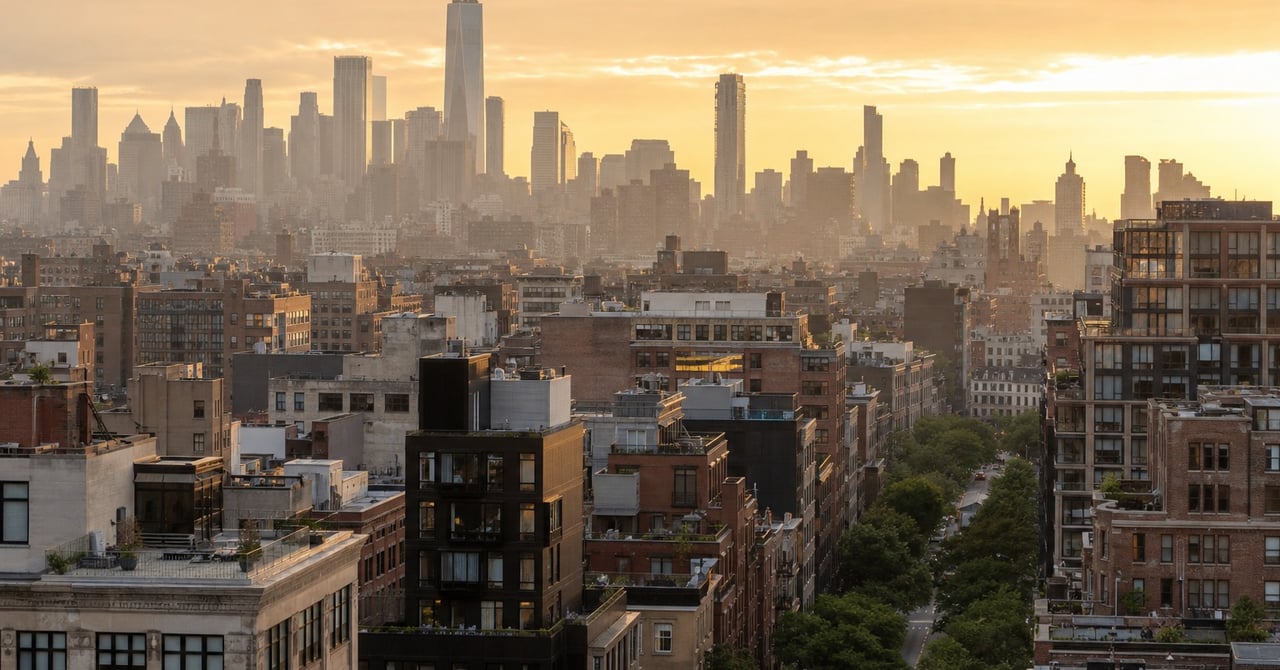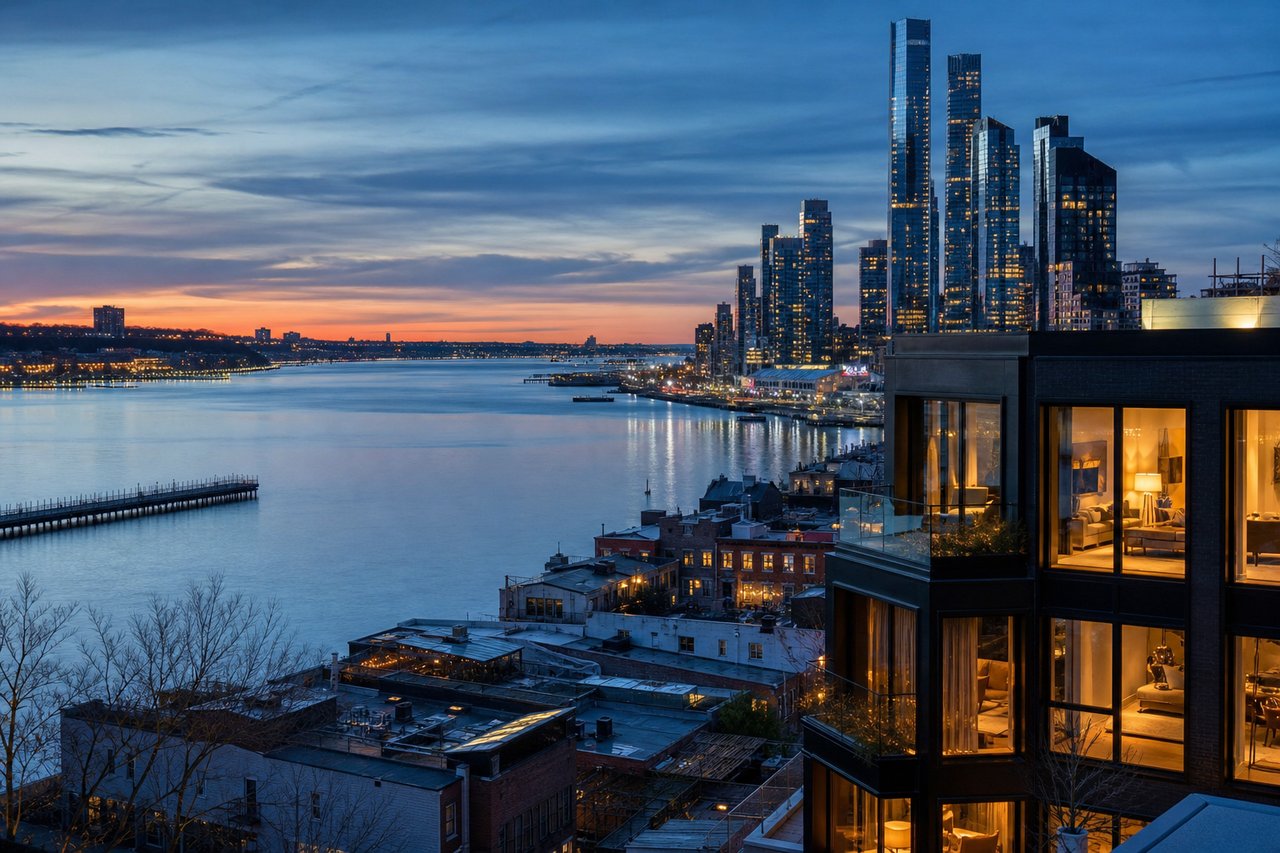
What does Hudson Yards mean for NYC condo buyers and real estate investors in 2026?
Hudson Yards remains Manhattan's most expensive neighborhood, with two-bedroom condos in signature towers starting around $3.5 million and Q3 2025 median sale prices reported near $4.99 million. The market has cooled from its peak frenzy, with days on market stretching significantly and prices showing mixed signals depending on the data source, which creates a more negotiable environment for well-prepared buyers and investors entering in 2026.
Hudson Yards is unlike any other neighborhood I work in. It was built from scratch, master-planned by Related Companies and Oxford Properties, and financed through a public-private structure that you can trace all the way back to the Hudson Yards Infrastructure Corporation's original demand and development study. That origin matters when you're deciding whether to buy here, because it shapes everything from the building governance to the long-term supply picture.
Here's what I tell every client who asks me about this neighborhood: Hudson Yards is not a value play. It's a premium-product decision. The question isn't whether it's expensive. It is. The question is whether the product, the location, and the current market dynamics align with your goals.
Where Hudson Yards Prices Stand Right Now
The pricing picture in Hudson Yards is genuinely more complex than a single headline number suggests, and I want to be straight with you about that.
According to a Hudson Yards Market Pulse published in winter 2025-26, the Q3 2025 median sale price for the neighborhood was $4.99 million, driven primarily by closings at 35 Hudson Yards and 15 Hudson Yards. That figure reflects the marquee-tower product that defines the neighborhood's upper tier. Two-bedroom units in those buildings are reported to start around $3.5 million and reach roughly $6 million, depending on floor, views, and finishes, according to a 2026 Manhattan residential snapshot from CooperatorNews.
At the same time, Redfin's Hudson Yards housing market data showed a median sale price of approximately $1.2 million in February 2026, down roughly 34% year-over-year, with 25 homes sold that month compared to 38 the prior year. Those are aggregator estimates, not official MLS or NYC Department of Finance figures, so treat them as directional. The most likely explanation is a shift in the mix of units closing, with smaller or lower-floor units making up a larger share of transactions.
What both data sets agree on is the direction of days on market. The winter 2025-26 market pulse reported that average time on market stretched to roughly 119 days, more than double the prior year's roughly 51 days. Redfin's February 2026 data showed homes averaging 155 days on market versus 85 days a year earlier. That's a consistent signal: Hudson Yards has shifted from a seller's market to one where buyers have real time to think, negotiate, and conduct thorough due diligence.
For context on how Hudson Yards fits within the broader Manhattan luxury landscape, here's how recent sales data looks across several of the neighborhoods I cover, based on Zillow market data for the trailing 90 days as of August 2026:
Area | Median Sale Price | Median Days on Market |
|---|---|---|
NoHo | $2,750,000 | 28 |
Murray Hill | $534,000 | 48 |
Nolita | $3,662,500 | 47 |
Upper West Side | $1,349,000 | 14 |
SoHo | $3,270,000 | 53 |
Upper East Side | $1,442,280 | 19 |
Park Slope | $1,815,000 | 53 |
Midtown East | $815,000 | 24 |
Area-level medians like these reflect a wide range of unit types, conditions, and floors. Your specific number depends on the building, the line, the finishes, and the timing. That's exactly where a building-level analysis with someone who knows this market makes a real difference.
What Hudson Yards Means for Investors Specifically
I work with investors across Manhattan and Brooklyn, and Hudson Yards raises a specific set of questions that I don't hear as often in, say, Murray Hill or the Upper East Side.
New construction stock and what it means for your carrying costs
Unlike prewar-heavy neighborhoods like the Upper West Side or Greenwich Village, Hudson Yards is almost entirely post-2010 construction. The amenity profiles are exceptional: concierge services, health clubs, outdoor terraces, and high-end finishes throughout. That premium product commands premium common charges. Before committing to any unit here, I walk my clients through the building's financials carefully, because common charges in amenity-rich towers can be substantial, and they affect your net return if you're renting the unit out.
The flip side for investors is lower near-term maintenance risk. Newer buildings don't carry the deferred-maintenance exposure you sometimes see in older co-op or condo buildings. But they do carry a different kind of risk: if additional luxury towers come online in adjacent Far West Side submarkets, you're competing with brand-new inventory for tenants and future buyers.
The longer absorption timeline is actually useful information
When days on market doubles in a single year, some investors read that as a warning sign. I'd frame it differently. A market where sellers are waiting 119 to 155 days is a market where a prepared, decisive buyer has genuine negotiating leverage on price, closing date, and concessions. That's a different environment than 2021 or 2022, and it rewards buyers who do their homework rather than those who simply move fastest.
The winter 2025-26 market pulse also noted that over the prior three-year window, median prices were down roughly 14% while median price per square foot was up nearly 8%. That divergence suggests the headline price decline is partly a mix-shift story, and that the per-square-foot value of well-located, well-finished product has actually held up. For an investor thinking about long-term appreciation, that's a more useful signal than the headline number alone.
If you want to see where broader Manhattan price adjustments are creating entry points right now, I've written about that in detail: Where Manhattan Price Reductions Are Creating Deals in 2026.
Closing Costs and Transfer Taxes: What Hudson Yards Buyers Need to Know
Hudson Yards condos are subject to the same NYC closing-cost framework as any Manhattan purchase, but at these price points, every line item is magnified. I'll cover the key tax structure here. For the full picture of what you'll owe, you need to run your own numbers with your attorney and closing team.
NYC Real Property Transfer Tax (RPTT)
The NYC Real Property Transfer Tax, administered by the NYC Department of Finance, applies to every transfer of real property in the city, including Hudson Yards condo sales. For a residential condo unit, the rate structure is straightforward: 1.0% on sales of $500,000 or less, and 1.425% on sales above $500,000. Since virtually every Hudson Yards condo closes well above $500,000, the 1.425% residential rate is the relevant tier for almost every transaction here.
For non-residential or mixed-use transfers, the rates are higher: 1.425% on sales of $500,000 or less, and 2.625% above $500,000. If you're looking at any commercial component within a Hudson Yards transaction, that distinction matters.
One thing I want to be clear about: the NYC RPTT statutes specify the tax obligation, but they don't dictate which party bears the economic cost at closing. Who pays RPTT is a negotiated contract term, and it can look different in a sponsor sale versus a resale. NYC regulatory guidance confirms that the return must be filed and the tax paid within 30 days of deed delivery, and that compliance is coordinated by the attorneys and title professionals involved in the transaction. Confirm how it's allocated in your specific contract.
State transfer taxes and the mansion tax
Beyond the NYC RPTT, Hudson Yards buyers also need to account for New York State transfer taxes and, at these price points, potentially the state-level additional transfer tax commonly called the mansion tax. Resources like TransferTaxCalculator.com and the NYC Transfer Tax Calculator can give you a directional picture, but for legal conclusions, the authoritative source is the New York State Department of Taxation and Finance. Your attorney will sort through the full stack of taxes that apply to your specific transaction.
Why you need a real estate attorney here
In Manhattan, retaining an attorney for a condo purchase isn't a formality. It's standard practice, and at Hudson Yards price points, it's essential. Your attorney will review the building's offering plan and financials, negotiate contract terms including contingencies and tax allocation, coordinate RPTT filing and payment, and ensure clean title and proper recording. The CooperatorNews Manhattan snapshot and the HYIC's original planning documents both point to the complexity of the infrastructure and governance structures at Hudson Yards specifically, which makes that legal review even more important than in a standard Manhattan resale.
For buyers who are also evaluating co-op versus condo structures across Manhattan, I've covered that comparison in depth: Co-op vs. Condo in NYC: Key Differences for Buyers.
And if you're curious how the neighborhood compares to the broader West Side luxury corridor, my post on how the High Line shapes Chelsea condo demand gives useful context on what's happening just to the south.
If you'd like to see how I approach this for clients who are seriously considering Hudson Yards, whether as a primary residence or an investment, I'd rather show you than explain it. The only way to know what the right move is for your situation is to run the numbers together.
I'd love to hear what other clients have said about working through decisions like this. Read my reviews on Google or Zillow.
Frequently Asked Questions
Is Hudson Yards still the most expensive neighborhood in Manhattan in 2026, or have prices cooled?
Hudson Yards still ranks as Manhattan's most expensive neighborhood overall. According to a winter 2025-26 market pulse, the Q3 2025 median sale price was $4.99 million, driven by closings at 35 and 15 Hudson Yards. Prices have shown some softening and days on market have increased significantly, but the neighborhood's position at the top of the Manhattan price ladder hasn't changed.
What do two-bedroom condos at 15 Hudson Yards and 35 Hudson Yards typically cost?
Two-bedroom units in those buildings are reported to start around $3.5 million and reach roughly $6 million, depending on floor, views, and finishes, according to a 2026 Manhattan residential snapshot. That places them firmly alongside Tribeca and Central Park South at the top of Manhattan's luxury condo market. Specific availability and current asking prices require a building-level search.
How long are Hudson Yards condos taking to sell, and does that give buyers negotiating room?
Yes, meaningfully so. The winter 2025-26 market pulse reported average time on market stretching to roughly 119 days, up from about 51 days the prior year, and Redfin data showed 155 days on market in February 2026 versus 85 days a year earlier. Longer absorption typically translates into more room to negotiate on price, closing timeline, and concessions, especially for buyers who come prepared with building-specific data.
How does the NYC Real Property Transfer Tax work for a Hudson Yards condo purchase?
The NYC Real Property Transfer Tax applies to all NYC real estate transfers, including Hudson Yards condos. For a residential condo unit priced above $500,000, the rate is 1.425% of the total consideration. Since nearly every Hudson Yards condo closes above that threshold, that's the applicable tier for most transactions. Who bears the cost at closing is a negotiated contract term, not a statutory mandate, so confirm the allocation in your specific purchase agreement with your attorney.
How does Hudson Yards compare to other luxury Manhattan neighborhoods for long-term appreciation and liquidity?
Hudson Yards offers newer construction and premium amenities, but it's a more concentrated, newer submarket than established neighborhoods like Tribeca or the Upper East Side, which carry decades of resale history and broader buyer pools. The winter 2025-26 market pulse noted that median price per square foot was up nearly 8% over a three-year window even as headline prices softened, suggesting the per-square-foot value of quality product has held up. Liquidity, however, is more limited than in higher-volume Manhattan neighborhoods, which is something every investor should factor into their exit strategy.
The Bottom Line on Hudson Yards
Hudson Yards is a genuinely distinctive market: the highest price points in Manhattan, newer construction with premium amenities, and a current environment where longer days on market give prepared buyers real leverage. Whether you're looking at a primary residence or an investment, the decisions here are too specific to make from a blog post alone.
I've spent 18 years working through exactly these kinds of decisions with buyers and investors across Manhattan and Brooklyn. If Hudson Yards is on your list, let's talk through it with your actual numbers. Reach out here to schedule a conversation.
Equal Housing Opportunity. Heather M. Cooper is a Licensed Associate Real Estate Broker and Certified Negotiation Expert licensed by the New York Department of State, Division of Licensing Services. This article is general information only and does not constitute legal, tax, or financial advice. Confirm your specific numbers and transaction details with your attorney, tax advisor, lender, or closing professional. Broker fees and commissions are fully negotiable and not set by law.