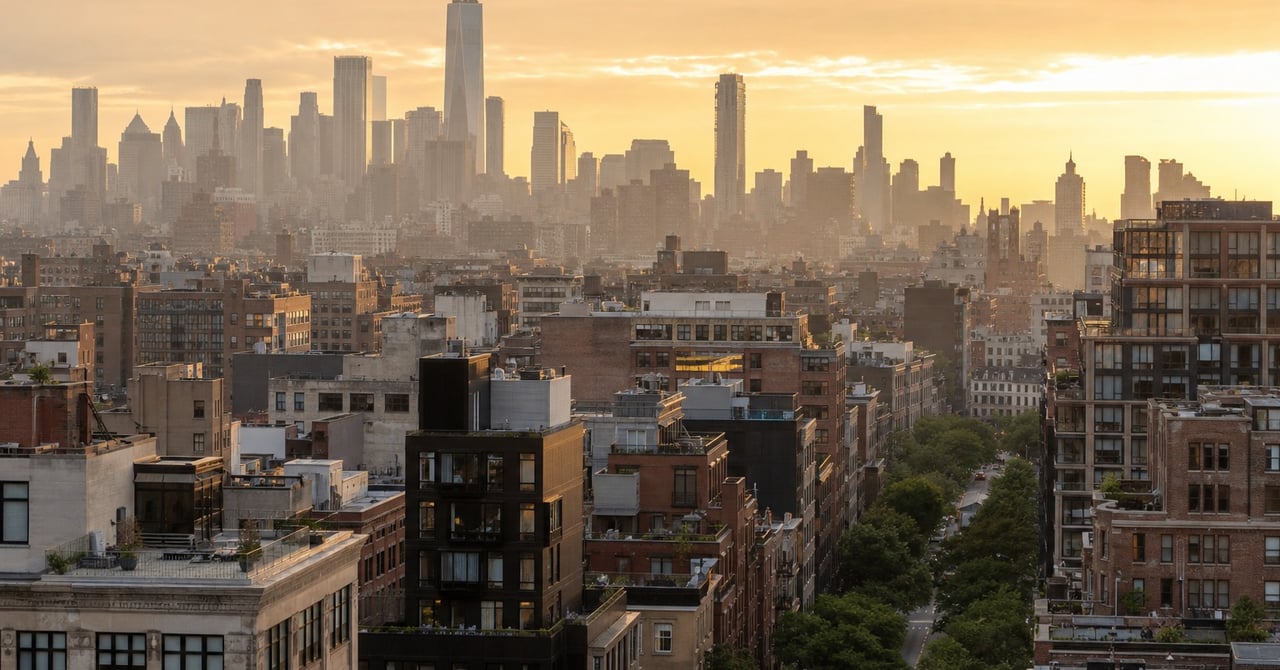
Grab a coffee at the basement cafe inside the new Studio Museum on 125th Street, then walk about fifteen blocks north to the Harlem Meer once the Gottesman Rink opens for the season in late October, and the same family bakery hands you your cup both times. That is not a coincidence built by some master planner at the Greater Harlem Chamber of Commerce. It is what happens when a neighborhood rebuilds two of its biggest public spaces in the same eighteen months and only has so many trusted local operators to hand the keys to.
Settepani, the longtime Italian bakery on Lenox Avenue, now runs the cafe in the lower level of the Studio Museum's new $175 million building and the concession stand at the Davis Center at the Harlem Meer. Those are the two highest-profile civic reopenings Harlem has seen in a generation, and a single Harlem business is the connective tissue between them. If you have been following either story separately, the food and beverage overlap is easy to miss. Put them next to each other and they tell you something about how this neighborhood's institutions are actually being staffed and run right now: not by outside operators parachuted in with new capital, but by the same handful of names Harlem already trusted before the ribbon cuttings.
What just changed at the Meer
If you walk the north end of Central Park on a September afternoon, you're catching the Davis Center mid-transition. The Gottesman Pool, which can hold up to 1,000 swimmers at a time, closes for the season on September 13. What comes next isn't dormancy. The same footprint becomes the Harlem Oval, a public green space that the Central Park Conservancy programs through the fall with morning yoga, lawn games like cornhole and bingo, and dance classes ranging from Funkaerobics to hip-hop. Then, in late October, the same engineered riser system flips the space into ice for the Gottesman Rink, which runs through March.
That three-season identity crisis by design is the whole point. The center replaced the old Lasker Rink, which operated only half the year and was frequently closed for maintenance issues. In its first full year, the Davis Center logged roughly 173,000 visitors and sold more than 40,500 tickets for public skating, lessons and clinics, according to reporting from Hoodline. Public skate sessions run about $10 during peak hours, roughly half the going rate at the popular rinks in Midtown, with children ages 4 to 16 paying $5 at all times. Local organizations that had lost their home ice when Lasker closed, including Figure Skating in Harlem and Ice Hockey in Harlem, now have dedicated time again.
None of that is abstract park-department trivia if you live within walking distance. It means the green space at 110th and Malcolm X Boulevard that was fenced off for years is now a facility that changes what it offers you roughly every three months, and it means the fall window between the pool closing and the rink opening is your best chance to use the Oval before winter programming takes over.
The museum calendar behind the counter
The Studio Museum's own fall season is moving on a similarly specific clock. Fade, the exhibition that had been on view, closed September 6, so if you were saving it for a weekend visit, that window is gone. What replaces the momentum: Kapwani Kiwanga's installation BLEED is on view through April 1, 2027, and on September 13 the museum hosts Kiwanga in conversation with the writer Imani Perry. Later this month, on September 30, the museum runs its Fall Member Preview.
The bigger structural news is what opens in October. A sustained becoming: Studio Museum Artists in Residence 2026 will show new work by Derriann Pharr, Simonette Quamina and Taylor Simmons, and it's the first cohort to work out of the museum's new J. Bruce Llewellyn Artist in Residence Center, a dedicated space the old building never had. Running alongside it through February 28, 2027 is Dreams of This Future: The Collection of Peggy Cooper Cafritz, drawn from a 2018 gift by the arts patron and Duke Ellington School of the Arts co-founder, who died that same year.
That's a full institutional season, not a single opening-week headline, and it lands on top of an already busy summer. The 52nd annual Harlem Week ran August 1 through 16 under the theme "Honoring Our Legacy," with Theater Row taking over 135th Street between Adam Clayton Powell Boulevard and St. Nicholas Avenue for two full days. If the neighborhood felt unusually full of tents and closed streets in mid-August, that's why. September is the quieter, more residential version of the same civic energy: smaller events, museum programming, and a park that's mid-changeover.
The rest of the map, block by block
The food scene backs up the same pattern of small, named Harlem operators taking over spaces that used to belong to something else entirely.
- Rotiss opened recently at 370 Lenox Avenue near West 129th Street.
- Copperleaf Bakery opened at 2118 Frederick Douglass Boulevard, making its own croissants and a rotating dessert case that includes ube cheesecake.
- Salento opened at 132 Hamilton Place in West Harlem, serving Hawaiian-style poke bowls topped with grilled salmon, chicken and hanger steak.
- CUP (Coffee Uplifts People), the fair-trade coffee brand co-founded by radio personality Angela Yee, expanded from its original Bed-Stuy location into the ground floor of The Africa Center, taking over the space that used to be Teranga.
- In East Harlem, a still-unnamed Japanese-American restaurant from Fork & Cork 2 LLC, run by Enrique Lermo and Anne O'Hare, is moving into the former Au Jus space at 1569 Lexington Avenue, with plans for a full liquor license and seating for 31.
Look at where these are landing. Frederick Douglass Boulevard, Lenox Avenue, Hamilton Place, Lexington Avenue in El Barrio: this isn't one corridor gentrifying in isolation. It's a pattern of existing Harlem food operators, some already running businesses elsewhere in the city, choosing to plant a second or third location here specifically, in spaces vacated by businesses that didn't make it through their lease renewals.
What it actually adds up to
None of this is a story about outside money discovering Harlem. Settepani was already a Harlem institution before it got handed the concession contract for a $160 million recreation center and a cafe inside a museum designed by Adjaye Associates. Angela Yee's coffee brand started in Bed-Stuy, not downtown. The new Salento and Copperleaf and Rotiss are independent, not chain expansions chasing a hot neighborhood.
What changed is the scale of what these operators are now trusted to run. A bakery on Lenox Avenue used to be a bakery on Lenox Avenue. Now it's also the food service inside two of the largest civic capital projects the neighborhood has seen in decades. That's a different kind of neighborhood investment than a new luxury development or a national retailer signing a lease, and it's the kind that's easy to miss if you're only tracking one story at a time instead of noticing who keeps showing up across all of them.
If you live here, the practical version of all this is simple: the Oval is worth a look before the rink takes it back in late October, the Studio Museum's October opening is worth building a Saturday around, and the next new storefront you walk past on Frederick Douglass or Lenox is more likely to be a Harlem name expanding than an outsider testing the market.
If you're the kind of person who tracks these threads because you're thinking further ahead, about a building, a block, or a move, that's a different conversation, and it's one Heather Sells NYC has regularly with buyers and sellers who want to understand a neighborhood before they commit to it. Schedule a complimentary market consultation when you're ready to talk specifics.